In this deep‑dive comparison, you’ll examine exactly where Kotlin and Python diverge in raw execution speed, memory economy, and runtime behavior. We go beyond shallow blog posts to run controlled CPU‑bound tests, concurrency stress trials, and real‑world I/O pipelines under identical conditions. You’ll learn which language dominates number crunching, how the JVM’s just‑in‑time compiler reshapes Kotlin’s throughput, and why Python’s object overhead can quietly choke a high‑load service. By the end, you’ll have a replicable testing framework and the insight to choose the right tool for performance‑critical projects without falling for hype.
Step 1: Map the Execution Engines – JVM vs. CPython
Kotlin compiles down to Java bytecode that runs on the Java Virtual Machine. The HotSpot JVM applies aggressive runtime profiling and just‑in‑time compilation, turning frequently executed paths into raw machine code. This means your Kotlin functions start slower during warm‑up but then approach C++‑level speed for long‑running processes. The garbage collector is generational and heavily tuned, which minimizes pause times when appropriately configured.
Python’s reference implementation, CPython, is a stack‑based bytecode interpreter. Your .pyc files are executed by a large switch‑case loop, with no built‑in JIT. Every operation, from adding two integers to looking up a variable, involves dictionary‑lookup overhead and boxed numeric objects. This architecture makes Python flexible and easy to debug but fundamentally slower for compute‑heavy loops. Understanding this core difference is the first key to benchmarking without bias.
Step 2: Pure CPU Workloads – The Fibonacci Gauntlet
To stress raw arithmetic, implement a recursive Fibonacci function (naïve, double recursion) in both languages. Write an idiomatic Kotlin version with tailrec optimization tailrec fun fib(n: Int, a: Long = 0, b: Long = 1): Long and a classic Python def. Run each on n=40 with wall‑clock timing, discarding the first few JVM iterations to account for warm‑up. The contrast is staggering: Kotlin’s JIT‑compiled loop completes in a handful of milliseconds, while Python takes multiple seconds because it rebuilds stack frames and boxes every integer object.
For a fairer yet still CPU‑bound test, use a mandelbrot set generator or prime sieve. Kotlin can leverage IntArray primitives that sit directly on the JVM’s unboxed arrays, avoiding boxing. Python’s list of booleans must wrap each True/False inside a PyObject. Even with NumPy array operations (which delegate to C), pure‑Python loops remain the bottleneck. The lesson: any algorithm dominated by tight arithmetic will run 10–100× faster in Kotlin under the JVM.
Step 3: Memory Overhead and Object Allocations
Kotlin’s JVM heritage brings a sharp distinction between primitive types and objects. A Kotlin Int variable gets compiled to a 32‑bit JVM primitive when used locally; arrays like IntArray store bare values with zero per‑element overhead. Even when you use a generic List<Int>, the JVM may apply escape analysis and stack allocation to reduce heap pressure. This keeps memory footprints predictable and cache‑friendly for data‑intensive pipelines.
In Python, everything is an object. A simple integer is a 28‑byte PyLongObject on a 64‑bit system, a list of 1 000 integers consumes ~8 KB just for the pointers, plus each integer’s overhead. That swelling becomes catastrophic when handling large datasets. A Kotlin array of 10 000 floats uses ~80 KB; the equivalent Python list of floats can easily exceed 300 KB. In microservice environments with tight container memory limits, Kotlin’s efficiency translates directly into lower cloud costs and fewer OOM kills.
Step 4: Concurrency – Coroutines vs. the GIL
Kotlin coroutines are a compiler‑backed feature that suspends functions without blocking OS threads. They run on a dispatcher that can use the JVM’s full thread pool. This allows true parallel execution of CPU‑intensive tasks: you can launch 10 000 coroutines that crunch numbers across 8 cores, and the scheduler will distribute them without global interpreter lock contention. The same design powers low‑overhead asynchronous I/O for non‑blocking network calls.
Python’s asyncio event loop cooperatively multitasks tasks on a single thread, held back by the Global Interpreter Lock. The GIL prevents multiple native threads from executing Python bytecode simultaneously, throttling any parallel CPU effort. To achieve real parallelism, you must farm work to concurrent.futures.ProcessPoolExecutor, which serializes data and incurs IPC overhead. While asyncio is superb for I/O‑bound concurrency, Kotlin coroutines win decisively whenever the workload includes mixed CPU and I/O steps.
Step 5: Cold‑Start and Serverless Impact
JVM startup has a reputation for being heavy. A Kotlin application packaged as a fat‑jar needs a few hundred milliseconds to bootstrap, resolve classes, and prime HotSpot. In serverless platforms like AWS Lambda, this latency can push a cold start to 1–2 seconds, which may violate strict SLA targets for user‑facing APIs. Mitigation involves GraalVM native images or SnapStart, but those add build‑time complexity.
Python’s interpreter initializes in under 100 ms. A pure‑Python Lambda function often achieves a sub‑300 ms cold start, making it the default choice for bursty, lightweight automation. However, heavy library imports (pandas, boto3) can erase this advantage quickly. If you pair Python with the ahead‑of‑time compiled C extensions, you may still beat a tuned Kotlin native image for extremely short‑lived invocations. The trade‑off is lower per‑invocation throughput once the JVM is warm.
Step 6: I/O‑Bound Processing – File Parsing and JSON
When reading multi‑gigabyte JSON logs, both languages lean on platform I/O buffers, but the data transformation layer reveals differences. Python’s built‑in json module is written in C and can parse streams at near‑data‑rate speeds, yet converting every field into Python objects still bloats memory. Kotlin can bypass full deserialization using libraries like kotlinx.serialization with streaming mode, mapping directly to data classes and keeping allocations tight.
For scenarios like image processing or database query result hydrations, Kotlin’s type‑safe builders can avoid intermediate hash maps. Python’s dynamic dicts are fast to write but become memory hogs when you load millions of records. On disk‑bound workloads, performance is often equal because the OS page cache dominates; the moment you add filtering, sorting, or enrichment logic, Kotlin’s lower per‑object cost widens the gap again.
Step 7: Scientific and Analytics Workloads – NumPy’s Edge
Python’s unmatched ecosystem for data science – NumPy, SciPy, Pandas, Torch – relies on C and Fortran backends. A matrix multiplication in pure Python is laughably slow, but one line of numpy.dot() invokes BLAS libraries that saturate CPU vector units. Kotlin offers similar bindings through the JVM’s JNI or JavaCPP, yet the ergonomics and community tooling are less cohesive for interactive exploration.
Where Kotlin shines is in productionizing trained models. You can embed a TensorFlow‑Java or ONNX runtime inside a Kotlin microservice without bridging to Python. The inference pipeline benefits from JVM warm‑up and simpler packaging. For offline data crunching, Python’s notebook fluency remains king; for serving predictions under load, Kotlin’s deterministic latency and smaller container images often deliver better cost‑per‑request.
Step 8: Microservice Throughput – Spring Boot vs. FastAPI
A straightforward REST endpoint that returns a small JSON payload can serve as a canonical throughput test. Using wrk or k6 against a Spring Boot webflux service written in Kotlin and a gunicorn‑uvicorn‑hosted FastAPI app, you will see that both can handle tens of thousands of requests per second under ideal conditions. The JVM’s NIO engine and Kotlin’s suspending functions efficiently multiplex connections, similarly to Python’s uvloop.
The inflection point appears when the endpoint includes a moderately CPU‑intensive step, such as data‑format conversion or template rendering. Kotlin’s JIT‑warmed code pushes latency down to single‑digit milliseconds, while Python’s equivalent falls into the 20–50 ms range. Under sustained load, the JVM’s generational GC may occasionally cause tail‑latency spikes; tuning CMS/G1 collectors brings them under control. Python, meanwhile, suffers less GC storming but hits a hard throughput ceiling due to the interpreter loop.
Performance Tuning Tips
1. Pre‑warm your Kotlin benchmarks deliberately
Always execute a warm‑up phase of at least 10 000 iterations before measuring Kotlin performance. Use the Java Microbenchmark Harness (JMH) to automate warm‑up, forking, and dead‑code elimination avoidance. This prevents misleading conclusions from cold JVM paths and aligns numbers with production‑like steady‑state behavior.
2. Swap CPython for PyPy or Cython where possible
PyPy brings a tracing JIT to Python, often delivering a 4–8× speedup on pure‑Python loops without code changes. Cython compiles type‑annotated Python to C extension modules, approaching Kotlin’s speed. Profile your application first; if the hot path is pure arithmetic, a PyPy deployment can dramatically close the gap without rewriting everything.
3. Eliminate boxing in Kotlin collections
Prefer IntArray, LongArray, and FloatArray over generic Array<Int> or List<Int> when you do not need nullability. This puts primitive values directly inside contiguous memory, slashing cache misses and garbage collector pressure. For even tighter control, use @JvmField on class properties to avoid synthetic getters when accessing fields from the same module.
4. Profile async code with coroutine‑aware tools
For Kotlin, use IntelliJ’s async stack trace viewer and the micro-utils coroutine debug probe. Combined with VisualVM or async‑profiler, you can pinpoint suspension points and dispatcher starvation. In Python, attach py-spy to a running asyncio process to sample native stacks without stopping the world; it immediately reveals whether the GIL is blocking CPU work or an event loop stall is to blame.
5. Explore GraalVM Native Image for serverless Kotlin
Build your Kotlin application with GraalVM’s native‑image to skip JVM class loading and JIT warm‑up entirely. The resulting executable starts in milliseconds and uses a fraction of the memory of a traditional JAR. While peak throughput may be slightly lower, the cold‑start speed and low idle footprint are game‑changers for Kubernetes pods and Lambda functions that scale from zero.
Frequently Asked Questions (FAQ)
Is Kotlin always faster than Python in web applications?
Not universally. For pure I/O‑bound services where the request handler immediately delegates to a database or external API, Python’s async runtime (uvloop) can reach throughput levels comparable to reactive Kotlin frameworks. The inflection point is any local computation or serialization logic; Kotlin’s JVM erases that overhead and will then significantly outperform Python.
How does the GIL limit Python’s ability to match Kotlin’s concurrency?
The Global Interpreter Lock (GIL) ensures only one thread executes Python bytecode at a time. Kotlin coroutines run on multiple JVM threads with no such lock, so they can genuinely parallelize CPU work across cores. Python must resort to multiprocessing, which introduces serialization cost and higher memory usage, making it less efficient for CPU‑heavy concurrent tasks.
Can I call Python code from Kotlin if I need a performance‑critical library?
Yes, but proceed with caution. You can embed Python via GraalVM’s polyglot capabilities (using org.graalvm.polyglot) or launch a Python subprocess and communicate through protocols like Apache Arrow IPC. The inter‑language bridge adds latency, so isolate the Python call to coarse‑grained work units. Alternatively, look for JVM‑native equivalents like Deep Java Library or KotlinDL to avoid the bridge.
Is Kotlin Native faster than the JVM version for command‑line tools?
Kotlin/Native compiles directly to machine code via LLVM, offering instant startup and lower memory overhead – ideal for short‑lived CLI applications. However, its throughput is often lower for long‑running tasks because it lacks the JVM’s runtime profiling and adaptive JIT. For a tool that runs for ten seconds or less, Native is faster; for a server that processes requests for hours, the JVM’s optimizations usually win.
Which benchmarks should I rely on for a fair Kotlin vs. Python comparison?
Use multiple publicly maintained suites as a starting point (TechEmpower for web, The Computer Language Benchmarks Game for algorithmic tasks), but never draw final conclusions from them alone. Your own workload’s object graph, concurrency pattern, and I/O mix matter more. Always build a minimal reproduction of your exact use case, profile both implementations with the same hardware and runtime versions, and measure tail latency alongside throughput.
Conclusion
Kotlin and Python occupy different ends of the performance spectrum, yet each thrives in its niche. Kotlin’s JVM lineage delivers brute‑force CPU speed, lean memory profiles, and true parallel concurrency – ideal for services that scale under load. Python’s readability and vast C‑backed ecosystem give it an unshakable advantage in analytics, rapid prototyping, and I/O‑heavy integration. The ultimate decision hinges on the dominant shape of your application: compute‑bound muscle or orchestration‑light agility. By replicating the steps in this guide, you arm yourself with evidence that cuts through folklore, ensuring your next architecture chooses speed without sacrificing the right kind of simplicity.
Kotlin Vs Python Performance

野菜たっぷり!万能特製ソースで食べるトルティーヤ レシピ・作り方 by Heart♡ちゃん – 楽天レシピ
![トルティーヤは巻かずに片手でパクッ! カルディ公式レシピ「折りたたみトルティーヤ」に挑戦してみた | Pouch[ポーチ]](https://theelitehotel.com/wp-content/uploads/2025/07/IMG_9208.jpg)
トルティーヤは巻かずに片手でパクッ! カルディ公式レシピ「折りたたみトルティーヤ」に挑戦してみた | Pouch[ポーチ]

キャンプで簡単メキシカン!サラダチキンのトルティーヤラップ | 料理・レシピ 【BE-PAL】キャンプ、アウトドア、自然派生活の情報源ビーパル

本当のトルティーヤ プロが教える レシピ・作り方 by 辻クッキング – 楽天レシピ

トルティーヤのレシピ30選|おしゃれで人気のラップサンドやタコスに挑戦! | レシピサイト Nadia | ナディア – プロの料理家のおいしいレシピ

トルティーヤレシピ レシピ・作り方 | クラシル | レシピや暮らしのアイデアをご紹介

トルティーヤのレシピ30選|おしゃれで人気のラップサンドやタコスに挑戦! | レシピサイト Nadia | ナディア – プロの料理家のおいしいレシピ

コーングリッツを使ったトルティーヤ レシピ・作り方 by MAMA6138 – 楽天レシピ

【低糖質レシピ】美味しくてヘルシー!薄焼き卵のトルティーヤの作り方 | 4yuuu
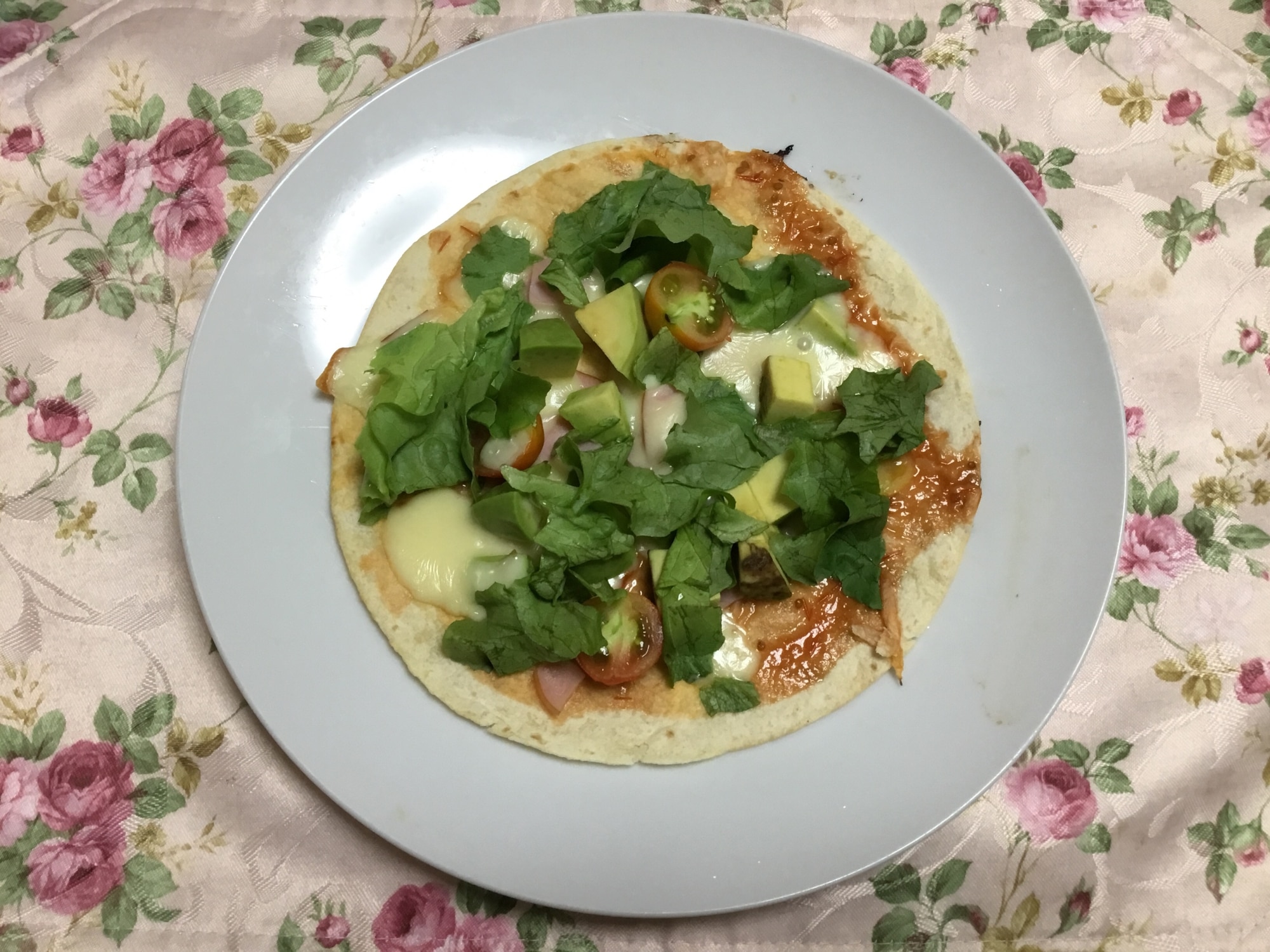
トルティーヤでピザ レシピ・作り方 by ぺろぽろ – 楽天レシピ
![トルティーヤ|だいどこログ[生協パルシステムのレシピサイト]](https://cont-daidokolog.pal-system.co.jp/system/recipe/3618/img/thumbnail/pc_detail_main_PS_KCJ_0359M.jpg)
トルティーヤ|だいどこログ[生協パルシステムのレシピサイト]

トルティーヤのおすすめの巻き方3選!用途によって使いわけよう – macaroni

巻くだけ簡単♪ハムとチェダーチーズのトルティーヤ レシピ・作り方 by МK – 楽天レシピ

「トルティーヤ」レシピ20選|タコスやブリトーに | レシピサイトNadia

【カルディ】トルティーヤのおいしい食べ方を徹底解説「定番のタコス」「簡単旨辛ピザ」 | ヨムーノ

業務スーパーのトルティーヤがすごい!アレンジレシピを大公開 | 料理・レシピ 【BE-PAL】キャンプ、アウトドア、自然派生活の情報源ビーパル

【みんなが作ってる】 トルティーヤ 具材のレシピ 【クックパッド】 簡単おいしいみんなのレシピが355万品

【トルティーヤレシピ6選】タコスだけじゃない!定番からアレンジまで|編集部おすすめレシピ | レシピサイトNadia
![トルティーヤは巻かずに片手でパクッ! カルディ公式レシピ「折りたたみトルティーヤ」に挑戦してみた | Pouch[ポーチ]](https://youpouch.com/wp-content/uploads/sites/4/2023/06/IMG_9204.jpg?resize=150)
トルティーヤは巻かずに片手でパクッ! カルディ公式レシピ「折りたたみトルティーヤ」に挑戦してみた | Pouch[ポーチ]

おもてなしでも喜ばれるおすすめトルティーヤレシピ5選|おしゃれで人気のタコスに挑戦!

具がこぼれない! トルティーヤの巻き方のレシピ動画・作り方 | デリッシュキッチン